
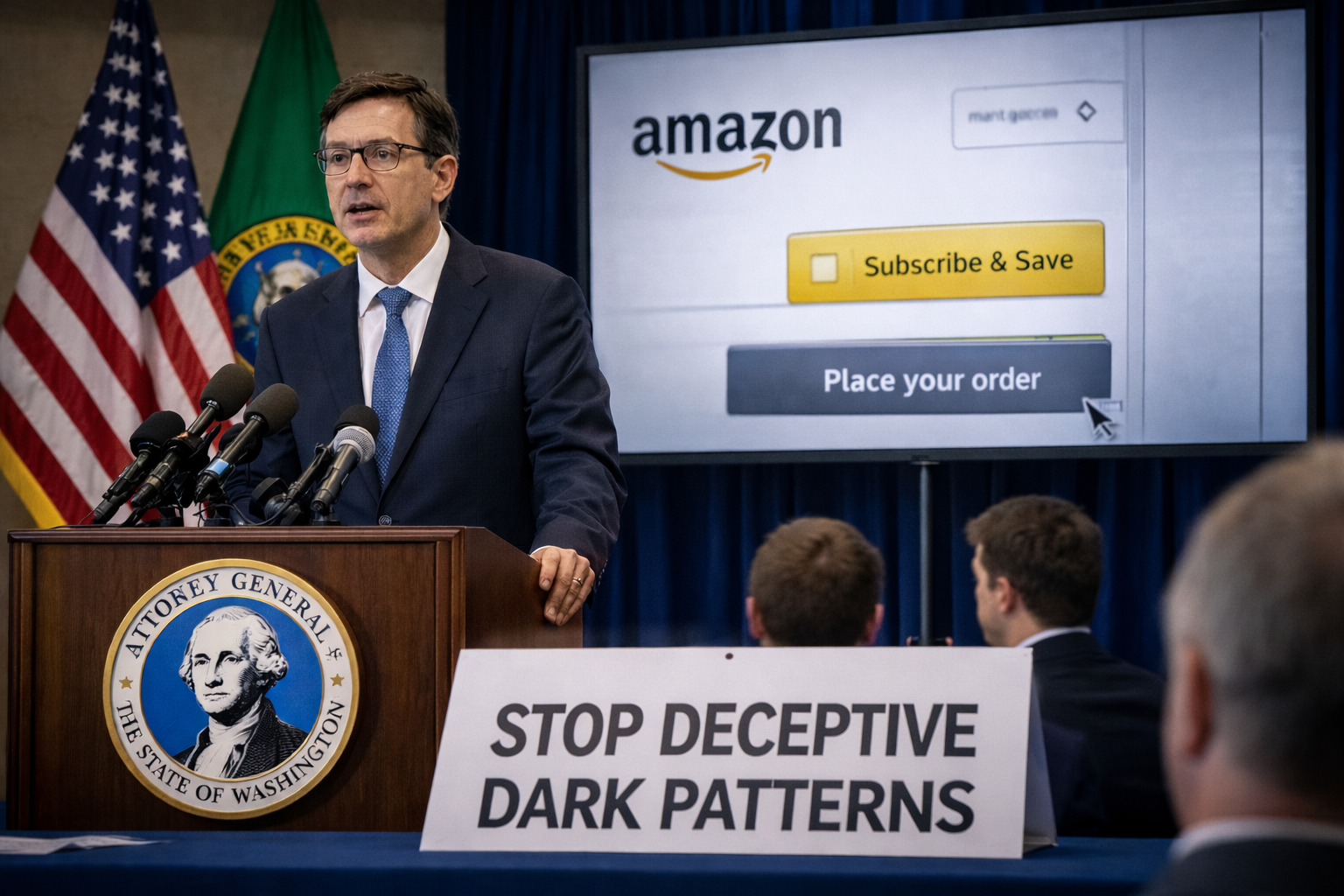
Washington Attorney General Sues Amazon Over Alleged Use of Dark Patterns in Online Purchases
The Washington Attorney General has filed a lawsuit against Amazon, accusing the company of using deceptive design practices known as dark patterns to push consumers into unwanted subscriptions and charges. The case focuses on how Amazon allegedly steered users into enrolling in Amazon Prime without clear consent, then made cancellation difficult.
The lawsuit was brought by Bob Ferguson, who claims these practices violate Washington’s Consumer Protection Act. According to the complaint, millions of users nationwide may have been affected, including a large number of Washington residents.
Dark patterns are interface designs that guide users toward decisions they might not otherwise make. In this case, the state alleges Amazon used confusing language, repeated prompts, and obstructive steps to pressure customers into Prime memberships that cost $14.99 per month or $139 per year.
The lawsuit claims consumers were often led to believe Prime enrollment was required to complete a purchase. In other instances, users attempting to cancel Prime reportedly faced multiple screens, vague button labels, and warnings designed to slow the process. The state argues these tactics were intentional and systematic.
Washington regulators say this conduct caused real financial harm. Some consumers paid for Prime for months or years without realizing they were enrolled. Others abandoned cancellation attempts due to time and frustration. The complaint states that this behavior undermines informed consent, a core requirement under consumer protection law.
This lawsuit fits into a broader national effort to rein in manipulative digital design. Regulators across the country are taking a harder look at how large platforms influence consumer behavior. The Federal Trade Commission has warned that dark patterns can qualify as unlawful deception.
For Amazon, the financial exposure could be significant. The state is seeking injunctive relief, civil penalties, and restitution. Washington law allows penalties of up to $7,500 per violation. If each affected consumer counts separately, damages could climb quickly.
Amazon has denied wrongdoing and maintains that Prime enrollment and cancellation are simple. The company states users can cancel online in minutes. The court will likely examine whether the average consumer would find the design misleading, not whether cancellation was technically possible.
This case matters to consumers because it could force changes to how subscriptions are sold online. A ruling against Amazon may require clearer opt ins and faster cancellations across many industries, including streaming, software, and e-commerce.
It also matters to businesses. Any company using recurring billing should review its checkout and cancellation flows now. Designs that add friction or obscure choices can create legal risk.
If you believe you were signed up for a subscription without clear consent or struggled to cancel, this lawsuit is one to watch. Cases like this often result in refunds, policy changes, or consumer claim programs.