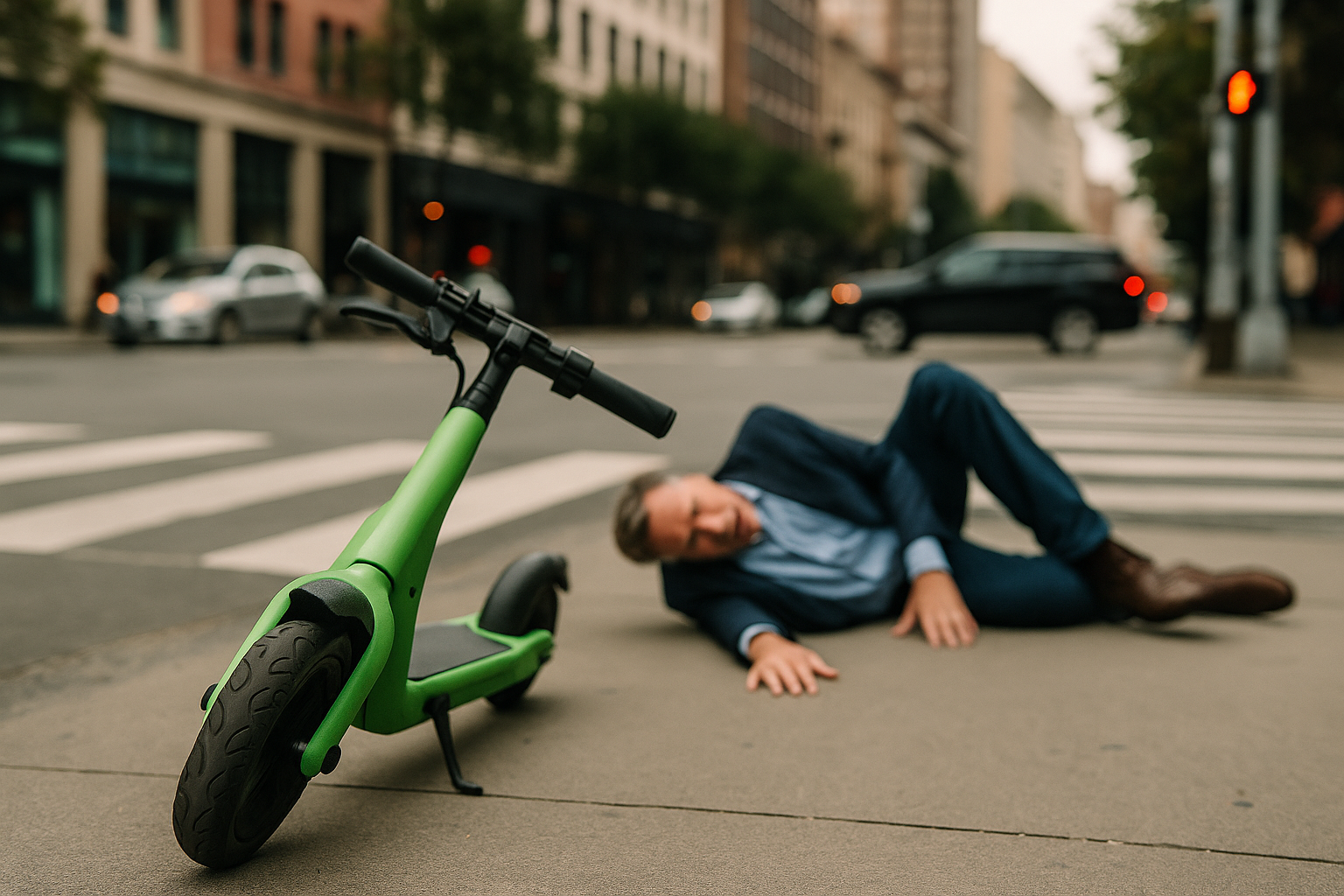
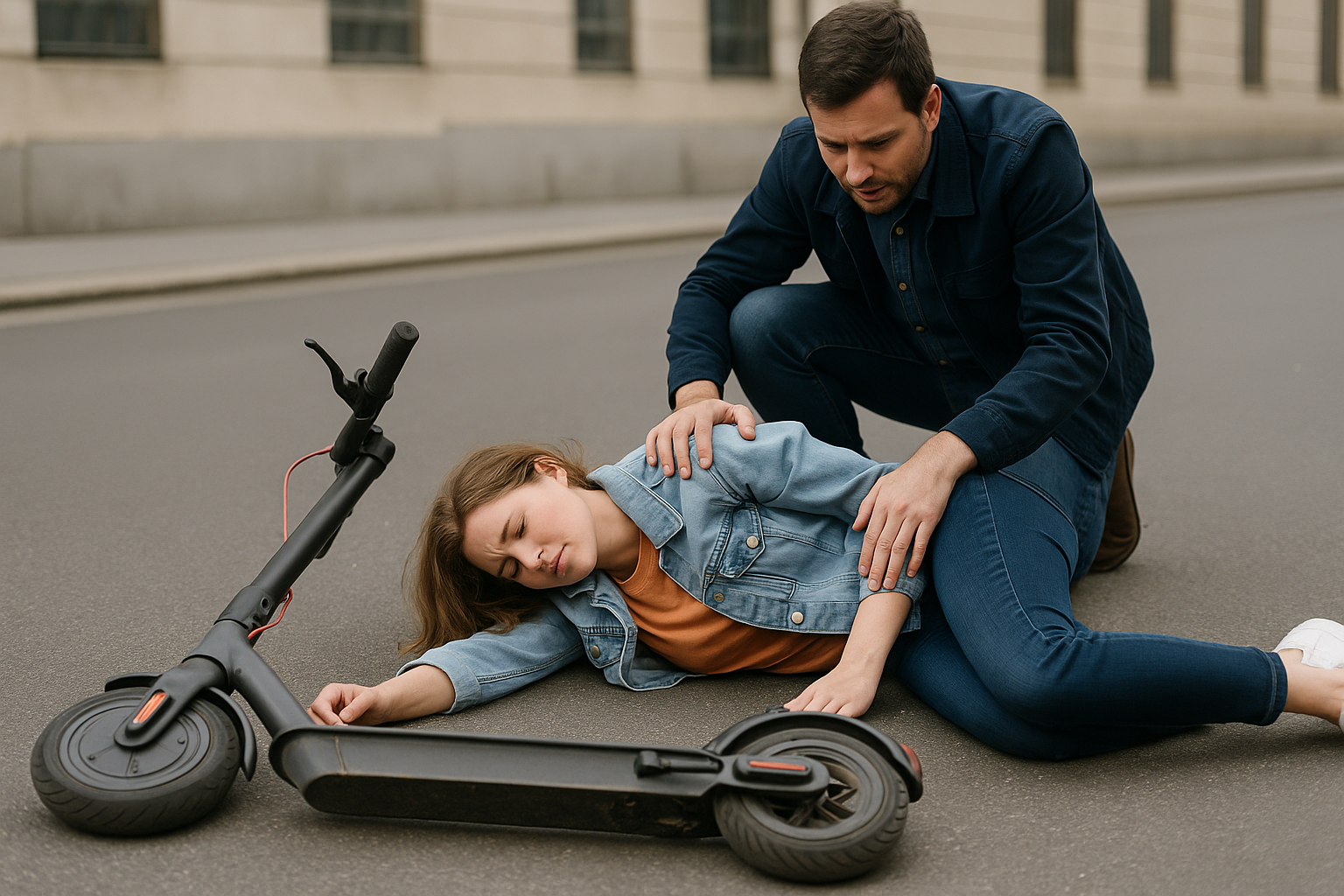
Rise in E-Scooter Passenger Injuries, Liability When Non-Riders Get Hurt
Electric scooters have become part of everyday transportation in cities across the country. Most reports focus on riders who fall or collide with cars, but a growing number of accidents now involve passengers — people riding on the scooter with a friend or partner. These passengers face unique risks, and many of them are filing injury claims after serious crashes.
Most scooter companies clearly state that only one rider is allowed on the device. Despite that, it is common to see two people sharing a scooter on busy sidewalks, parking lots, and bike lanes. These scooters are not designed to support two adults or even an adult and a child. The extra weight makes it harder to steer, stop, or maintain balance. When a crash happens, passengers usually suffer the worst injuries.
Who is responsible in these accidents? In many cases, the primary rider may be liable. Passengers place trust in the rider to operate the scooter safely. If the rider loses control, runs into a curb, or turns too sharply, the passenger can be thrown onto pavement or into traffic. Liability then depends on whether the rider acted reasonably. If they were speeding, weaving through pedestrians, or ignoring traffic laws, the injured passenger may have a valid claim.
But the rider is not the only possible defendant. The scooter company may be responsible if the device had mechanical issues. A sudden brake failure, loose handlebar, or battery malfunction can cause serious crashes even when the rider is careful. Passengers can pursue a product liability claim if evidence shows the scooter was defective. These cases often rely on maintenance records, internal reports, or data collected by the device before the crash.
City governments can also play a role. Many scooter injuries involve road hazards like uneven pavement, potholes, or broken sidewalks. If the passenger flew off the scooter because of unsafe public infrastructure, the city may share liability. These claims are more complicated because they involve strict notice requirements and shortened filing deadlines. Still, they are sometimes the only way for victims to recover full damages.
Passenger injuries vary widely. Common cases involve broken wrists, torn ligaments, shoulder fractures, and head injuries. Because passengers do not control the scooter, they often cannot brace for impact. Many victims hit their head or spine, even during low-speed crashes. Medical treatment can include surgery, long-term therapy, and months of lost wages.
What can victims do? The first step is medical attention, even if symptoms seem minor. Many head and neck injuries appear hours or days later. Documenting each symptom helps build a strong claim. Photos from the scene, witness statements, and screenshots from the scooter app can also support the case. Victims should avoid giving recorded statements to insurance companies until they understand their rights.
For riders, the lesson is simple. Never carry a passenger on an electric scooter. These devices are not built for two people, and even a careful rider can lose control. The risk to the passenger is far higher than most people realize.
For cities and scooter companies, the rise in passenger injuries is a warning. Clear rules and stronger enforcement are needed to keep sidewalks and bike lanes safe. Companies may need to adopt better safety education or redesign their apps to prevent misuse.
Passenger injury claims are becoming more common as scooters spread into suburban and urban areas. Courts are beginning to recognize that these victims deserve the same legal protections as anyone else hurt by negligent operation or defective products. As awareness grows, so will accountability for unsafe practices and unsafe designs.