Archive for federal lawsuit

Justice Department Sues Six States Over Voter Roll Maintenance

Justice Department Sues Six States Over Voter Roll Maintenance

The U.S. Department of Justice has filed lawsuits against six states, saying they failed to follow federal rules for maintaining voter registration lists. The cases focus on whether these states took reasonable steps to keep their voter rolls accurate, while still protecting eligible voters from being removed by mistake.

The lawsuits name Alabama, Iowa, Missouri, Ohio, South Dakota, and West Virginia. The Justice Department says these states violated the National Voter Registration Act, often called the NVRA. This law requires states to run ongoing programs that remove ineligible registrations in a careful way. It also sets limits so states do not purge voters unfairly.

Why would the federal government sue over voter lists. Because voter rolls affect real people. If a list is outdated, an eligible voter can show up on Election Day and be told they are not registered. That can lead to a provisional ballot, delays, and sometimes a lost vote. On the other hand, if voter rolls are sloppy, critics claim the system cannot be trusted. Even when fraud claims lack proof, bad list management can fuel public doubt.

The DOJ argues the six states did too little, for too long. It claims some states failed to use reliable data sources to identify voters who moved or died. The DOJ also points to a lack of consistent list maintenance practices across counties. In some places, the federal government says state officials ignored repeated warnings and did not fix known gaps.

The states respond with a different story. Several state leaders argue elections are primarily run by states, and that federal lawsuits intrude on state authority. They also warn that aggressive list cleanup can harm lawful voters, especially seniors, students, and military families. People in these groups often move, travel, or use nontraditional mailing addresses. That can trigger errors in automated systems.

That tension sits at the heart of these cases. The law demands accuracy and fairness at the same time. Courts will need to decide whether the challenged states struck a lawful balance, or whether they fell short of what the NVRA requires.

The legal fight will likely turn on details. Judges will examine what programs each state uses, how often they run them, and how they confirm someone is truly ineligible before removing them. The NVRA allows removals for certain reasons, like death, relocation, or disqualifying criminal convictions in states where that applies. But the process has to include safeguards, including notice procedures and waiting periods in many circumstances.

If the DOJ wins, the consequences could be concrete and expensive. Courts can order states to change policies, upgrade systems, retrain staff, and submit to oversight. Some cases end in consent decrees, which are binding agreements enforced by a court. Those can last years. Taxpayers often pay the bill for compliance work, outside consultants, and ongoing reporting.

These cases also matter beyond the six states. A strong ruling for the DOJ could encourage similar enforcement in other jurisdictions. A strong ruling for the states could limit how far the federal government can go when it believes list maintenance falls below federal standards.

For voters, the practical takeaway is simple. Voter registration is not a one-time task. If you move, change your name, or stop voting for a long time, you should check your registration status before the next election. Errors happen. People get dropped, addresses fail to update, and mail does not arrive. A lawsuit does not fix those issues overnight.

These lawsuits also raise a larger accountability question. When an election system breaks down, who owns the problem. State officials control the day-to-day mechanics, but federal law sets minimum standards. If a state ignores those standards, the DOJ argues it must step in. If the DOJ pushes too hard, the states argue it turns election administration into a political battlefield.

The courts will not settle every public argument about elections. They will answer a narrower question. Did these states meet the duties the NVRA imposes. The outcome will shape how voter list rules are enforced, how states document compliance, and how voters experience the system in the years ahead.
Civil Rights Groups Challenge Anti-DEI Orders

Civil Rights Groups Challenge Anti-DEI Orders

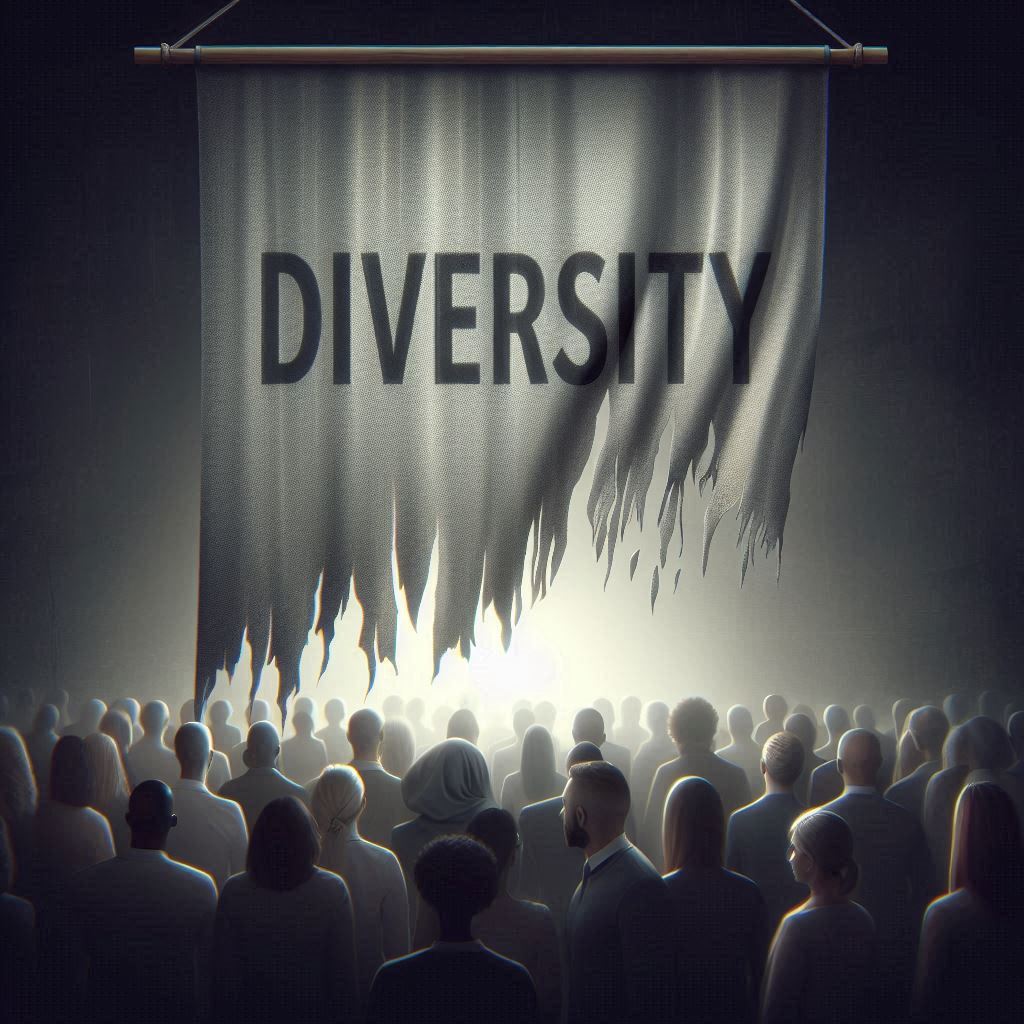
A coalition of civil rights organizations, including the National Urban League, NAACP Legal Defense Fund, and Lambda Legal, has filed a federal lawsuit against the Trump administration, challenging recent executive orders aimed at dismantling diversity, equity, inclusion, and accessibility (DEIA) initiatives within federally funded institutions.

The lawsuit, filed in the U.S. District Court for the District of Columbia, argues that the executive orders violate constitutional protections of free speech, equal protection under the law, and due process. Plaintiffs contend the orders were politically motivated and designed to suppress training, education, and workplace policies that address systemic inequality.

According to the complaint, the executive actions prevent federal agencies, contractors, and grant recipients from offering training programs that reference concepts like systemic racism, implicit bias, and gender identity. Organizations that continue such programs risk losing federal funding or facing compliance investigations.

Derrick Johnson, president of the NAACP, stated, “This is a direct attack on the progress we’ve made in educating our workforce, empowering communities, and correcting historical inequities. We cannot allow civil rights to be erased under the guise of neutrality.”

Legal experts believe the case could be pivotal in defining the boundaries between government funding conditions and First Amendment rights. Historically, courts have protected speech even when it challenges government preferences or appears controversial.

The plaintiffs argue that diversity education is not only constitutionally protected, but essential to creating inclusive environments across schools, nonprofits, and healthcare systems. By attempting to censor these conversations, the government is allegedly weaponizing federal dollars to stifle dialogue on race, gender, and identity.

The Trump administration has defended the executive orders as efforts to prevent what it calls “divisive concepts” from infiltrating public programs. However, critics say that justification is vague and rooted more in ideology than law. The lawsuit seeks to block enforcement of the orders and reinstate funding eligibility for affected institutions.

If the court rules in favor of the plaintiffs, it could restore DEIA training nationwide and limit future executive overreach on social programming. If not, organizations that rely on federal funding may be forced to eliminate or heavily censor their diversity initiatives.

Civil rights advocates see the case as part of a broader struggle over how American institutions confront race, history, and inequality. With state-level efforts to limit DEI growing in parallel, this federal case could have wide-reaching consequences for public discourse and policy.

The lawsuit is expected to proceed to oral arguments in the coming months. In the meantime, DEIA programs in many states remain in limbo as institutions wait for clarity on what they can teach—and what they must omit to stay funded.


Clothing Brand Patagonia Joining the Fight to Preserve National Monuments

Native American tribes and environmental groups aren’t the only ones who care about President Donald Trump trying to whittle away at protection for national monuments. Patagonia, a well-known brand of outdoor clothing, has recently voiced its contention as well.

Trump, an ardent supporter of states’ rights, recently signed legislation that would scale back two Utah-based monuments. People who seek to protect the Grand Staircase-Escalante and the Bears Ears National Monument voiced their displeasure immediately. Their main fear is that companies will use the land for grazing, mining, and the drilling of oil because it’s rich in uranium.

Patagonia, one of the most outspoken critics of this development, stated it will sue the White House. It also informed its website visitors that President Trump stole their land. The company’s CEO, Rose Marcario, stated that Patagonia will take its fight to court if necessary.

On December 4, the environmental activist group Earthjustice filed a federal lawsuit representing eight other like-minded organizations. The lawsuit claims Trump violated the 1906 Antiquities Act that guarantees the preservation of monuments or ruins that sit on public land. Earthjustice argues that Trump is catering to the coal mining industry instead of protecting the heritage of monuments and ruins in the two Utah parks.

Navajo Nation, a Native American activist group, stated that it will file a legal challenge against Trump’s decision as well. Like Patagonia and Earthjustice, Navajo Nation cites the violation of the Antiquities Act as the reason for its actions and outrage.

Former President Barack Obama created the Bears Ears National Monument before leaving office in January 2017. The monument includes approximately 100,000 archaeological sites.

The move by Trump upset Native Americans who conduct many spiritual rituals at the two monuments, including healing ceremonies and collection of wood and herbs.

The December 4 legislation by Trump reduces Bears Ears National Monument by 84 percent. This amounts to 220,000 acres. He also requested Ryan Zinke, Secretary of the Interior, to review an additional 27 monuments earlier in 2017.

Trump has also ordered downsizing of the Grand Staircase-Escalante monument to one million acres from 1.9 million acres. His reasoning is that public lands should be available for public use. However, critics think he’s more concerned with the potential profits from billions of tons of oil and coal deposits.

Woman Sues Nye County Due to Lengthy Jail Stay of Daughter

A mother in Pahrump, Nevada claims that Nye County officials forced her daughter to unnecessarily stay in jail for more than year. In the lawsuit filed against Nye County, the woman claims that the officials ignored the orders of the court to send her daughter to the state psychiatric facility.

The mother filed the federal lawsuit on Tuesday against both Bye County and Sheriff Sharon Wehrly. According to the lawsuit, Caryssa Lennox was arrested by law enforcement in February 2014 for destruction of property and the misuse of an emergency phone number.

Two months after her arrest, Lennox was evaluated by two psychologists at the Nye County Detention Center. The two psychologists concluded that Lennox was mentally incompetent to go to court and stand trial. They recommended that Lennox receive treatment at Lake’s Crossing Center.

After another two months, a district judge in Nye County ordered that the sheriff’s office take Lennox to the maximum-security Lake’s Crossing, which is a psychiatric facility. The district attorney of Nye County and the lawyers of Lennox agreed that the 28-year-old would be treated at Seven Hills Hospital, which is a Lennox-mentally-incapable-of-standing-trial-quotebehavioral health treatment center.

The sheriff’s office neglected or refused to transport Lennox to either facility. Lennox was forced to remain in jail until October 2014 when the district judge again ordered Lennox to be transported to Lake’s Crossing. Three months later, Lennox was evaluated by psychologists and it was again deemed that she was mentally incapable of standing trial.

In the lawsuit, the mother claims that the sheriff’s office violated Lennox’s due process rights. According to Greg Cortese, who is the lead attorney of the lawsuit, an inmate is usually committed to Lake Crossing after two psychologists agree that the inmate is psychologically unfit to go to court. However, the sheriff’s office refused to fulfill these expectations in Lennox’s case.

For the third time in the span of year, the court ordered that Lennox be transported to Lake’s Crossing in February 2015. The charges pressed against Lennox were dropped in April and the court ordered that Lennox be taken to Seven Hills Hospital. Within six days after Lennox’s charges were dismissed, the women was taken to the private Henderson center.